
#58 Why I've Kept Quiet about the Quiet Revival

Unless you’ve been hiding under an evangelical rock, you’ve probably heard about The Quiet Revival, a major report from The Bible Society based on research with over 13,000 people in the UK. It points to something remarkable stirring beneath the surface of British culture.
Something in the UK is changing, and we’d be wise to pay attention.
As the report puts it:
“Where once we saw ageing congregations and steady decline, we now see growth, led by the young. Where once we saw apathy or even hostility to the Bible, we now see openness.”
The headlines speak for themselves:
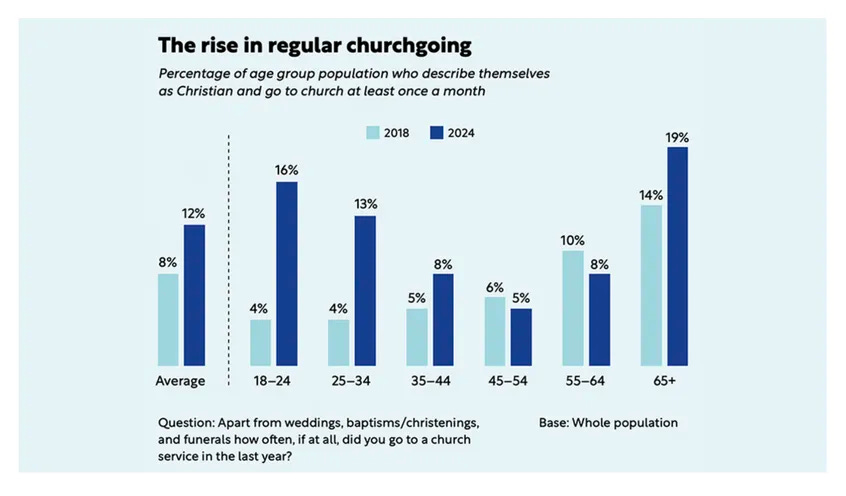
Regular church attendance has risen from 8% to 12% between 2018 and 2024
Among 18–24s, it’s jumped from 4% to 16%
One in five 18–24-year-old men attend church regularly
31% of non-churchgoers would attend a service if invited by a friend
56% would welcome a Christian praying for them
After years of decline and discouragement, this feels like the fresh wind of hope many of us have been praying for.
While the rise in church attendance is encouraging, some are pointing out the need to read the stats carefully. They suggest wider social factors could be playing a part, such as immigration from countries where churchgoing is more common, or looser definitions of what “regular attendance” actually means. And then there's the issue of self-reported attendance — what people say they do versus what they actually do.
None of this diminishes the signs of spiritual openness, but it reminds us that revival isn’t just measured by numbers in buildings.
So why have I been quiet about it? Not because I’m cynical like some have been - that feels like scoring an own goal. I’ve just been taking time to reflect on what this moment actually requires from us as the Church. More importantly, what does it require of me?
First things first: this report is really good news.
Spiritual openness really is growing, especially among Gen Z. Young people are more curious, more open to prayer, and more willing to explore faith than many of us realised. You don’t have to look far beyond the report to find stories of Gen Z rediscovering church, giving it a go, or turning up for the very first time. As someone leading a schools work organisation that spends every day working with young people, I can honestly say we’ve never seen this level of openness to faith beyond the church walls.
Recently, Pastor and Leader, Pete Greig shared a message that dives into the signs, stories, and headlines pointing to a rising spiritual hunger — many of which echo what The Quiet Revival report highlights. It’s well worth a listen and is not just a summary of encouraging trends but a wake-up call. It is a reminder that if God is moving, our job isn’t just to notice it, but to align ourselves with Him and take part.
One of the worst things we can do with a report like this is just talk about it for a few months and then move on. We can too easily throw around lines like, “We don’t want the revival to stay quiet, we want it to become a roar,” and then quietly carry on as normal, hoping the next round of stats will look just as good.
This is a moment to give thanks, but it’s also a moment to get ready.
So how should we prepare?
First, we need to remind ourselves that more church attendees don’t automatically mean more disciples. There are many countries where churchgoing is extremely common, but living out the way of Jesus is far less visible. High attendance doesn’t always equal deep transformation.
The quiet revival might be real. But without effective discipleship, it won’t last.
A discipleship culture means creating a culture of next steps for everyone.
Whether someone’s exploring faith, just starting out, or has been following Jesus for years-there should always be a clear next step. Growth isn’t a programme. It’s a journey.
I spoke with a church leader recently who admitted they were so busy running Sundays, managing rotas and keeping things ticking over, they rarely had time to ask, Are we actually helping people take a step closer to Jesus?
So here’s the challenge: if 100 Gen Zs walked into your church next week, would you be ready to offer them a clear next step? What about 10? How about one?
If we’re serious about responding to what is happening, we need more than the same old routines. It’s time to think differently and act on purpose.
So let’s talk about how we can show up, skill up, and follow up.

Show Up: Sharing Faith
The data’s clear: people outside the Church are more open to the gospel than we think.
The Quiet Revival report shows people are more open to spirituality, prayer, and even the Bible, but that doesn’t mean they grasp who Jesus is or what grace really means. We can’t confuse openness with understanding. If we’re not careful, we’ll celebrate interest and never clearly communicate the message that actually saves.
A general rise in spiritual belief doesn’t mean people understand the gospel. Curiosity about faith isn’t the same as conversion. As someone once said, you don’t experience spiritual rebirth through a general belief in God.
So are those inside the Church confident to share their faith? Do they actually know how to explain the gospel? Can they connect their own story to what God’s done?
This is a discipleship issue. It’s also a gospel clarity issue. We need to help people move from vague belief to real faith and that takes more than openness. It takes courage.
Let’s not forget the report reminds us that 42% of young female churchgoers and 45% of young males say they often struggle with anxiety or depression. That’s nearly half of Gen Z in our churches carrying heavy emotional burdens. If they don’t know how the gospel speaks into that, they’re unlikely to share it with anyone else. Before they pass on the good news, they need to know how it’s good news for them.
Skill Up: Deepening Faith
One in five people are open to the Bible.
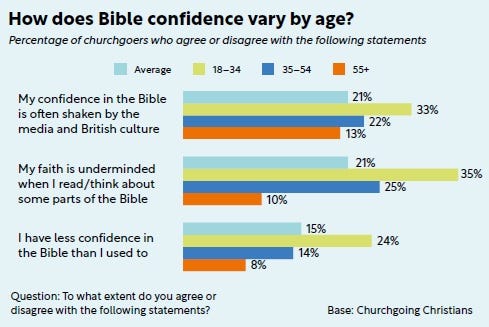
But how many Christians know how to read it with confidence? There’s a clear need for deeper discipleship around Scripture. About 35% of young churchgoers say reading certain parts of the Bible has actually undermined their faith. We can’t assume people know how to engage with Scripture just because they own a Bible.
We often tell people to read more, but rarely show them how.
Here are a few questions I’ve been sitting with:
Do we actually teach people how to read the Bible, or just tell them to read it more?
Are we building a Bible-reading culture, or just hoping one forms on its own?
Are we curating tools and resources that help people grow, or leaving them to the noise of the internet?
Do we create space for honest questions, or make people feel like they should already know the answers?
If we don’t teach people how to read with confidence, they’ll either give up or drift into vague spirituality. Worse still they might settle for reading only the most Instagrammable bible verses taken out of the context of a Christ submitted life.
Follow Up: Make Room for Growing Faith
A third of 18–24-year-old non-churchgoers say they’d come to church if a friend invited them. Over half would welcome prayer from a Christian.
That’s not a small opening: it’s a wide open invitation.
But an invitation only works if there’s something meaningful on the other side of it. The Church needs to create spaces that are ready to receive people – not just on Sundays, but in everyday life. That means building environments where people feel like they can belong before they believe.
The goal isn’t to water things down, it’s to open the door. Curiosity shouldn’t be met with church subculture confusion. Starting a life with Jesus can be disorientating enough without us making it harder. A good place to start is asking: what are the unwritten rules of church life we just assume people get? And how can we break those down before they become barriers? This isn’t about being more seeker-sensitive. It’s about being more human-sensitive.
We also need to build a culture of prayer inside the church – where praying with one another is normal, not rare. When was the last time you simply said, “Can I pray for you?” in a church setting – let alone outside one?
A praying church inside becomes a bold church outside.
If we believe God is moving, we need to be ready. Not just with seating capacity but with relational capacity. Not just to put on services but to walk with people. If spiritual hunger is rising, we need to make sure there’s a table set when they come looking to be fed.
If church attendance really is rising, let’s thank God for it. But let’s not forget that 88 percent of people in the UK are still disconnected from any church community - including yours. That’s not a reason to sit back. It’s a reason to get moving.
The fields are open. The hunger is real. And the gospel still changes lives.
So let’s show up, skill up, and follow up.
When God is moving, let’s make sure we don't get stuck watching from the sidelines, and start walking alongside others on their journey to Christ.

Such important points you have made. One way to disciple new comers would be through family discipleship. Families inviting new people to have lunch with them after the service and then to make that a weekly invitation. Prayer, openness to questions and Bible reading could all be a part of the discussion naturally around the table.
“This is a moment to give thanks, but it’s also a moment to get ready.” Yes 🙌